Just to promote govt's policy of Make in India, BSNL said, it cannot afford to procure sub-standard equipment from inexperienced companies, not having proven technology. BSNL complained that when competitors were procuring world-class 4G equipment from experienced vendors, why should BSNL be compelled to procure locally.
The finance minister is ready to present a second financial package. The Centre has ruled out a mega stimulus and will rely on targeted, incremental packages. Industry is clamouring for a bailout, the liquidity upheaval in capital markets is nowhere close to being sorted out, and all budgetary forecasts now stand irrelevant, reports Arup Roychoudhury.
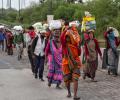
The beneficiaries of the second set of announcements are expected to be micro, small, and medium enterprises, farmers, women, poor, migrant workers, and other marginalised sections of the society, reports Arup Roychoudhury.

'The numbers are null and void now. Look, we can give out projections now, but we know that a week later those numbers will also be irrelevant. So we need to wait,' a top government official said.

A government official said out that with hardly any economic activity, an immediate duty hike will not be productive and could be announced once the lockdown eases and demand revives.
'Despite the pandemic, we aspire to maintain the momentum of last year.'

This is because the bond market has factored in the Rs 4.88-trillion gross borrowing for April-September 2020.
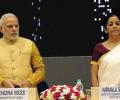
The stimulus package is expected anytime this week and will be aimed at the urban and rural poor; disadvantaged sections of society; MSMEs and some of the worst-affected sectors.
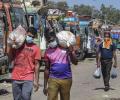
It is likely the government will divide the country into different zones during the proposed extended period of lockdown and might permit a few services to function in safe zones.
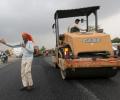
'Some districts have said that areas which are away from the urban centres and where there have been minimal to zero Covid-19 cases may be exempted from the lockdown and construction activity should be allowed,' said a person in the know.
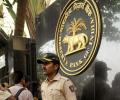
The downward surprise in Q2 stemmed from a stronger-than-anticipated drag from gross fixed capital formation and marginal weakness in private final consumption expenditure. In Q3, projection errors emanated mainly from a steep unanticipated contraction in gross fixed capital formation, which was the deepest in the new series of GDP.
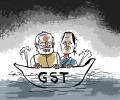
Even with the Rs 20,000 crore distributed among states, it will still be a fraction of what they have been demanding in financial support and clearance of pending dues.
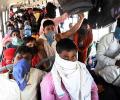
The auto ancillary industry - one of the worst hit due to the labour exodus - will need at least three months to get its factories up and running.
This permission was given some time late last month, before the Reserve Bank of India (RBI) on March 31 issued the indicative borrowing calendar for the states for April-June and the one for the Centre for April-September.

'At this point of time, West Bengal is doing better than other states in tackling the crisis. We have a chief minister who herself has hit the streets to do what is to be done, and at the same time ensuring a proper lockdown. She is also trying day and night to set up the requisite infrastructure.'

To meet the revised estimates for 2019-20, the central government will have to garner Rs 5.03 trillion in total revenues in March, which has seen the worst phase of the coronavirus pandemic so far and the resultant lockdown.
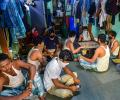
'This is a period of significant uncertainty, of unknown unknowns.'

Companies have activated a comprehensive pandemic response plan with requisite risk mitigation protocols for keeping networks working as telecom is an essential service.
Officials said there had been no official word or indication from the top yet. The expectation from officials is to do what they can, but it is understood that all fiscal and budgetary targets don't matter anymore.
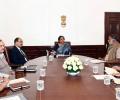
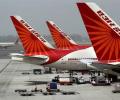
While the meetings on Friday were preliminary discussions, it is learnt that sectors like tourism; hospitality; aviation; micro, small and medium enterprises (MSMEs); and livestock have sought deferring loan repayments and temporary tax holidays in specific cases to help them tide over the steep fall in economic activity.
 © 2026 Rediff.com - Advertise with us - Disclaimer - Privacy Policy - Sitemap - Feedback - About us - Terms of use - Grievances